A simple, vet‑informed guide for keeping older cats comfortable, healthy, and happy.
🩺 Health & Veterinary Care
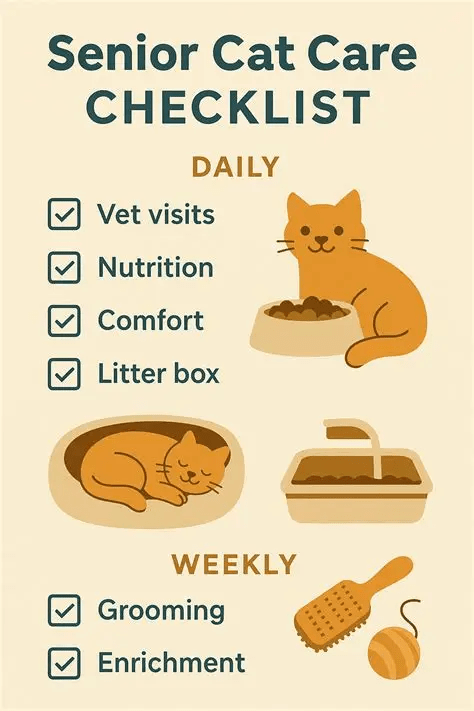
- Twice‑yearly vet exams — Schedule every 6 months
- Annual bloodwork + urinalysis
- Dental exam/cleaning
- Monitor weight weekly
- Track appetite, thirst, and litter habits
- Ask vet about arthritis pain control
🍽️ Nutrition & Hydration
- High‑quality protein diet
- Wet food daily to support hydration
- Omega‑3 or joint supplements
- Easy‑to‑digest formulas if vomiting or diarrhea
- Fresh water in multiple spots
- Water fountain for picky drinkers
🛋️ Home Comfort & Accessibility
- Low‑entry litter box
- Soft, warm bedding
- Ramps or steps to favorite spots
- Non‑slip rugs on slick floors
- Quiet retreat area away from noise
- Night lights for cats with declining vision
🧠 Mental & Emotional Well‑Being
- Short, gentle play sessions
- Puzzle feeders for enrichment
- Daily grooming to help with coat care
- Consistent routine — meals, play, sleep
- Extra affection if they seek it
🐾 Mobility & Arthritis Support
- Watch for jumping hesitation
- Provide warm resting spots
- Use raised food/water bowls
- Ask vet about joint meds
- Keep nails trimmed for better traction
🧼 Litter Box Maintenance
- Add extra boxes if mobility declines
- Use unscented litter
- Scoop daily
- Place boxes on each floor
❤️ End‑of‑Life Awareness (Gentle Section)
- Monitor quality‑of‑life changes
- Discuss comfort care options
- Provide calm, predictable days
- Offer extra reassurance
 Best Finds by Max